We build the systems a business runs on.

We learn how your business works, then build the software around it, from the screens your staff use all day to the reports you make decisions with. What we hand over is finished and ready for your team to use.

Based in Georgetown, Guyana. We reply within one business day, wherever you are.

The work we do

A single project often needs more than one of these, so we build each to work with the others and with the systems you already use.

Custom software

One system for your whole business.

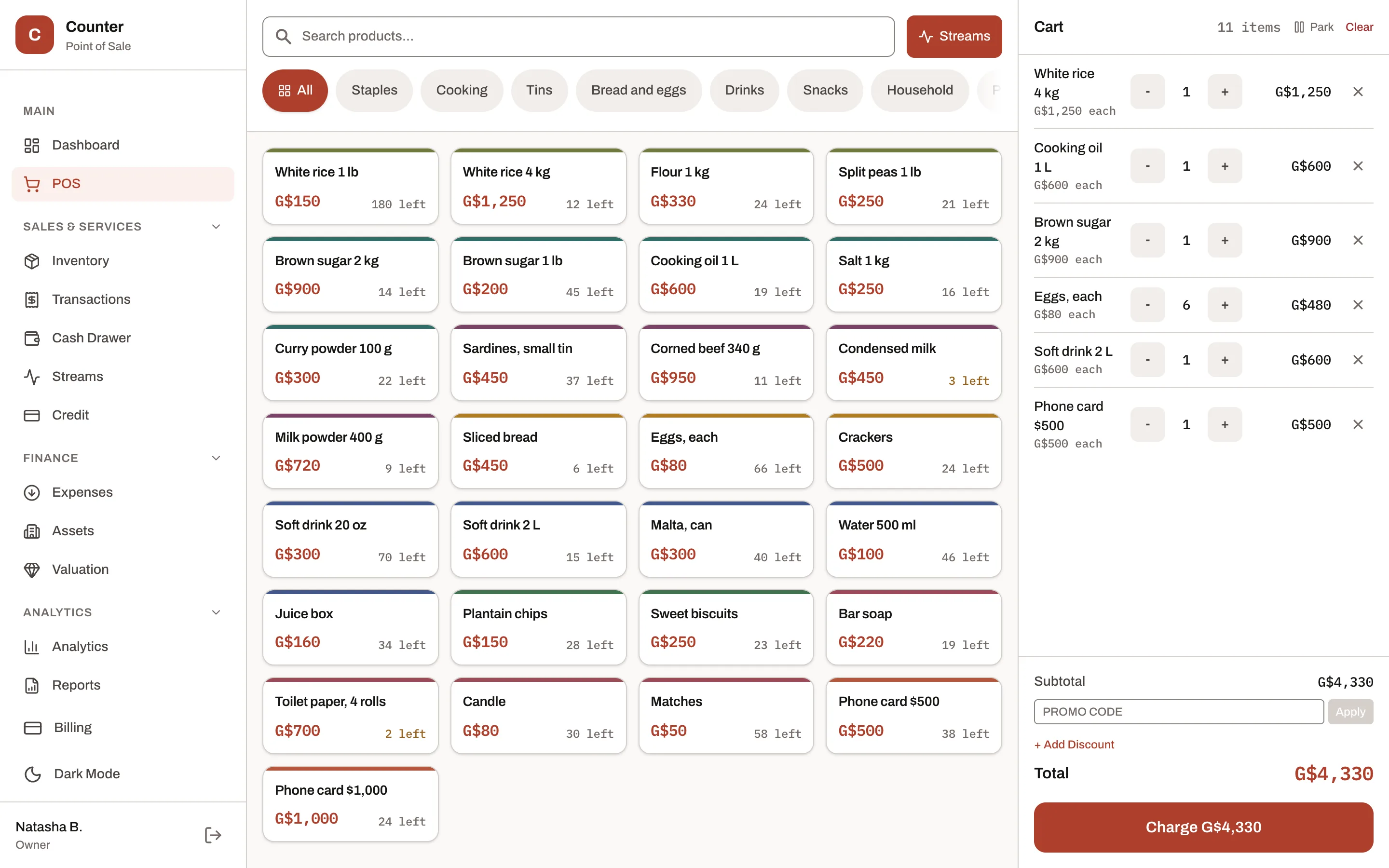
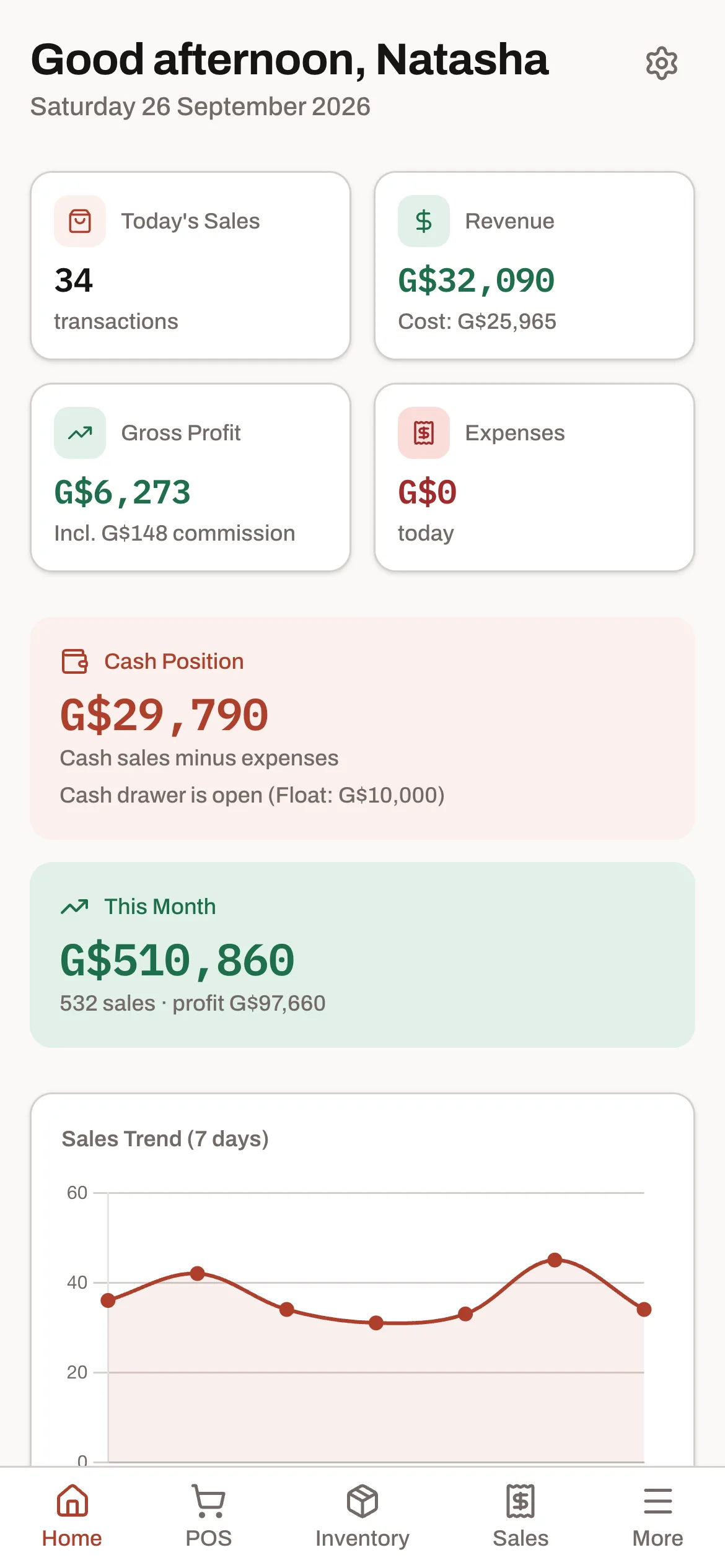
Orders, stock, customers and money are kept together, so everyone sees the same numbers at the same time, on the phones and computers they already have. People see only what their job needs, and every change records who made it. The work carries on even when the internet goes down.

More on custom software
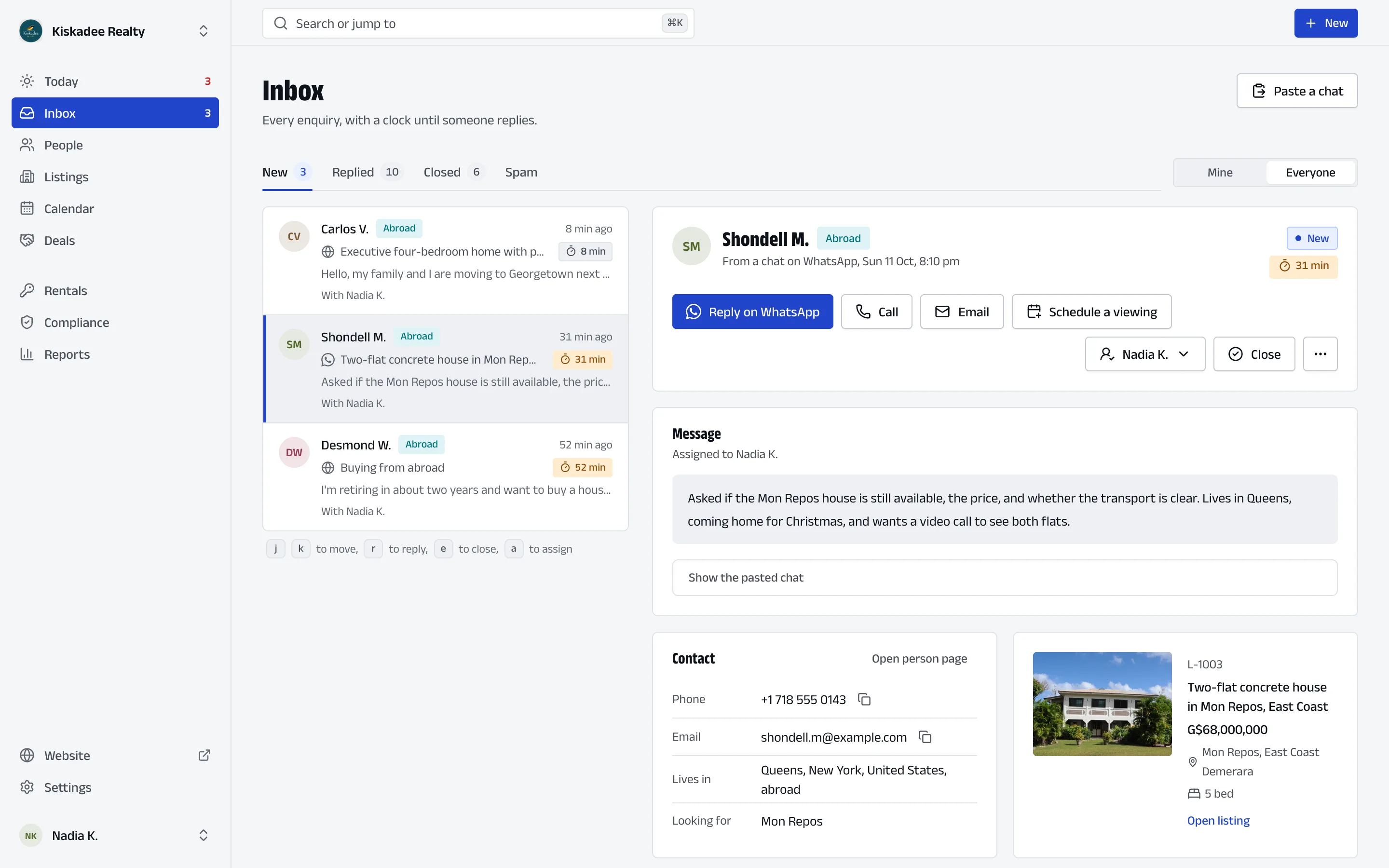
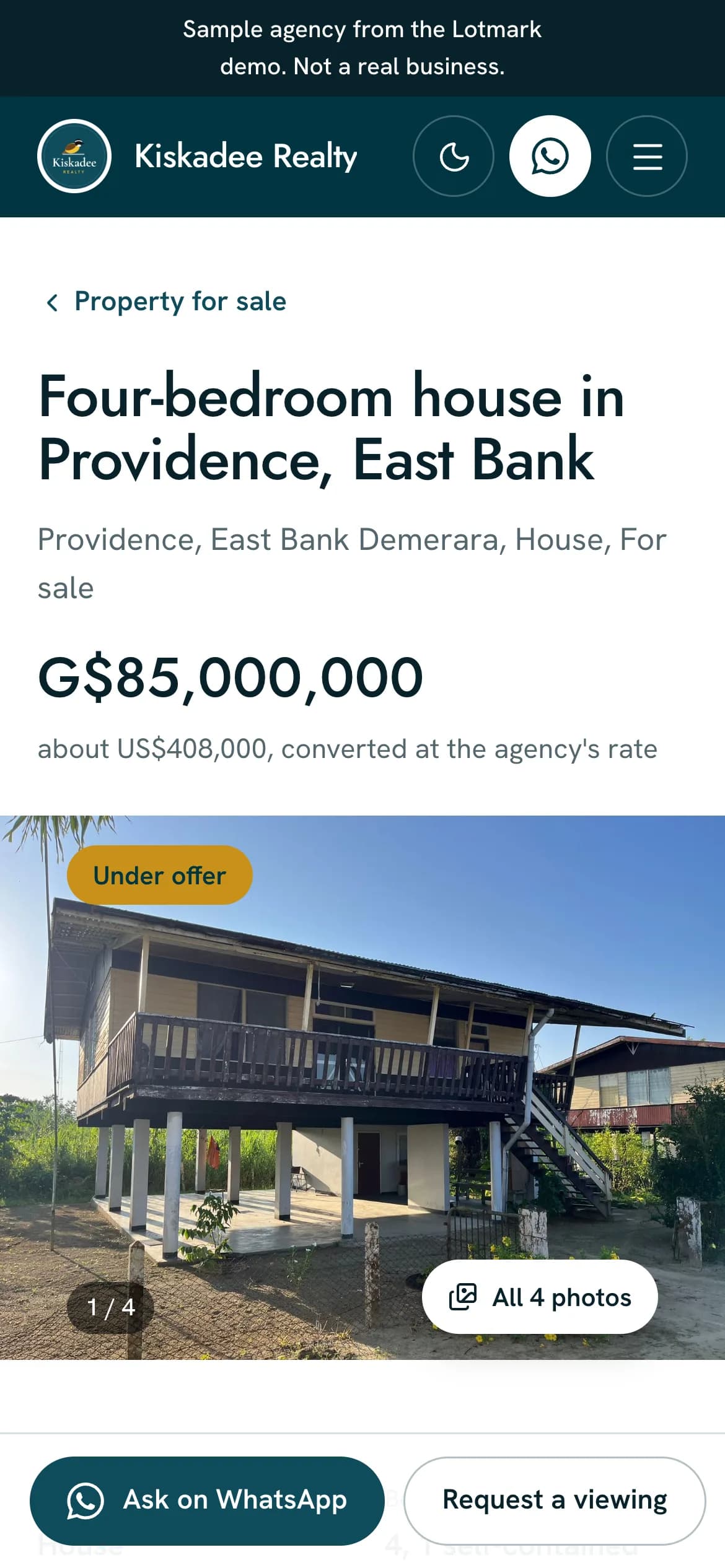
A deliveries board and a driver's phone. The phone loses its signal, the delivery is saved anyway, and the board catches up when the signal comes back.

Assistants

An assistant that works from your own documents.

It can reply to a customer at nine at night using your prices and policies, and point your staff to the exact page of a long manual. When it is not sure of an answer, it passes the question to a person.

More on assistants
An assistant replies to a customer after hours using the delivery schedule, then hands over a question that needs a person.

Automation

Routine jobs that run on their own.

Reports go out on time and late payments are followed up, without anyone having to remember. Each job keeps a record of what it did, and anything unusual is held for a person to decide.

More on automation
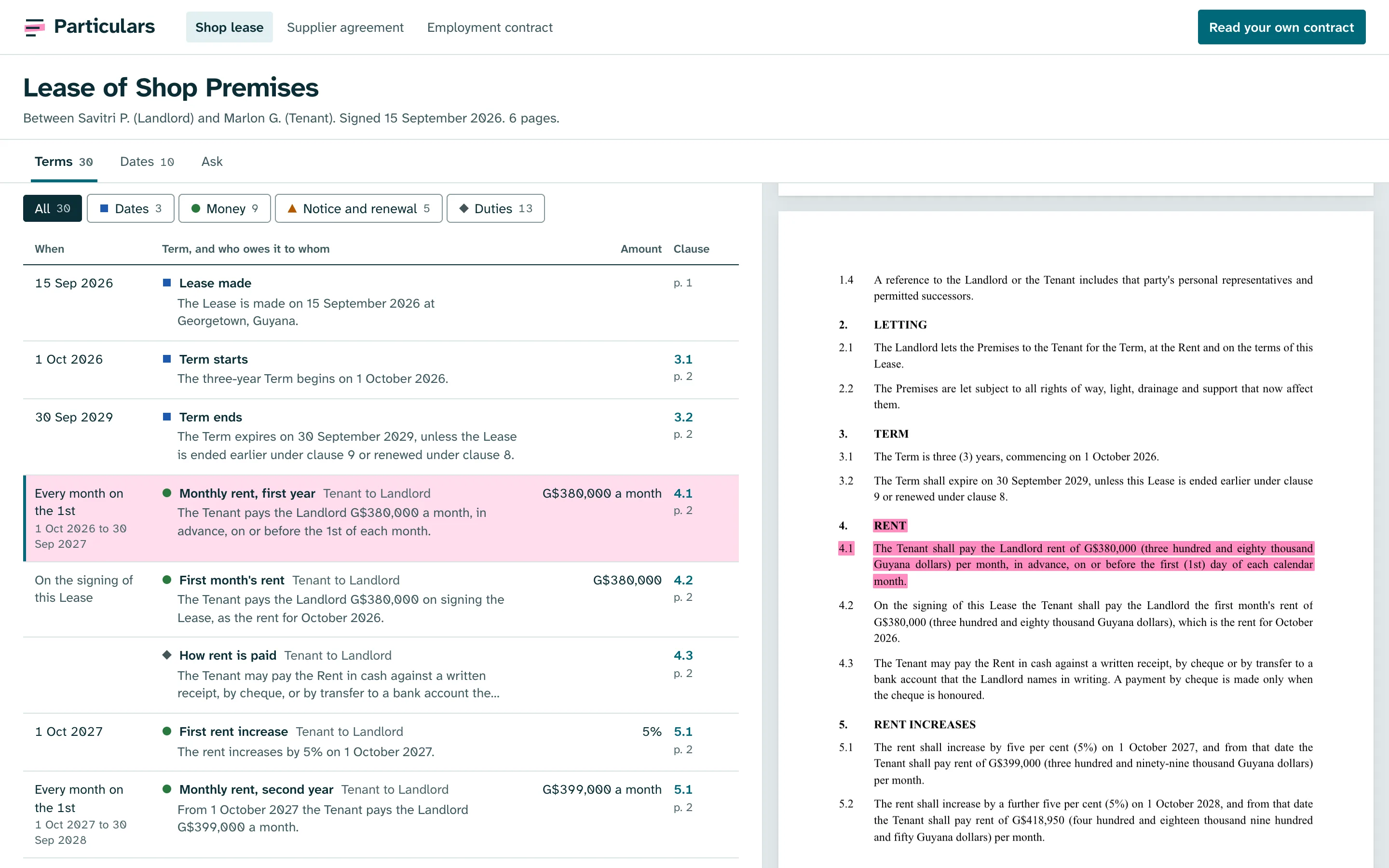
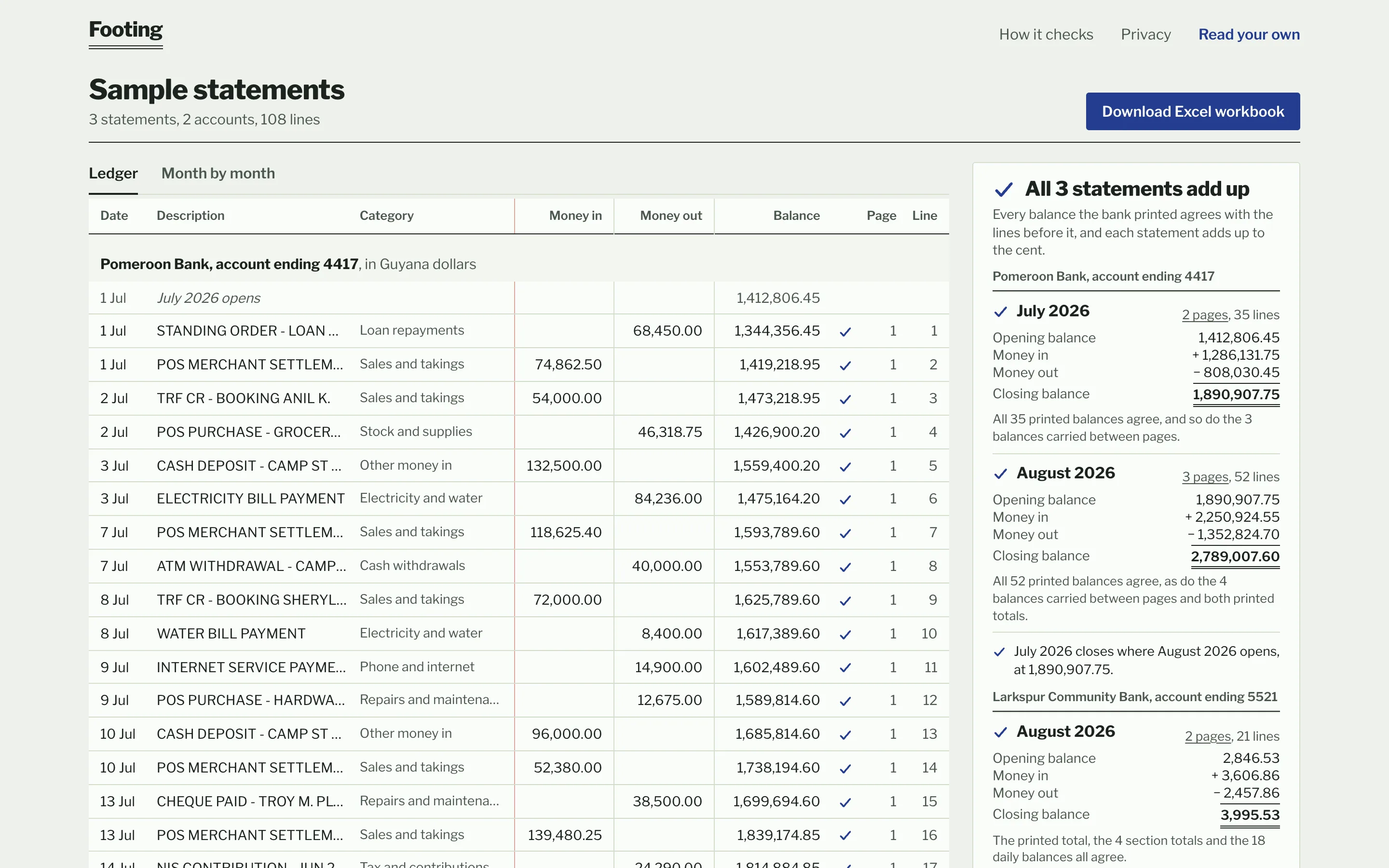
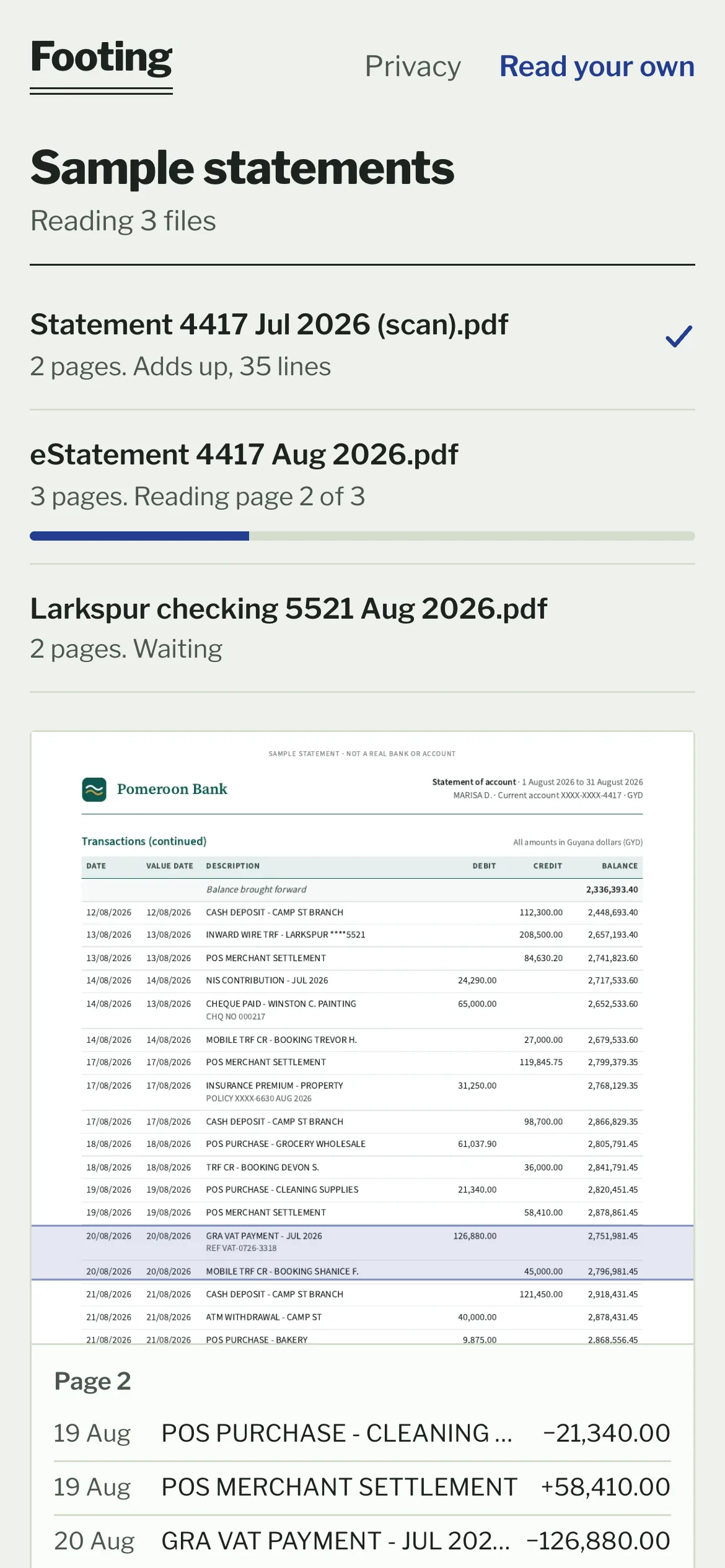
Six in the morning. A bank statement arrives, 210 of its 212 lines match the books, the other two go to Andrea, and the daily report is sent.

Excel and reporting

Spreadsheets and reports that check every total.

We build budgets, forecasts and month-end reports, and any total that stops matching turns red straight away. If you have a spreadsheet that nobody dares to touch, we can make it safe to change.

More on Excel and reporting
A month-end spreadsheet brings in the bank's lines, checks them, points out two differences and marks the month closed.

Habits we keep on every build

Software tends to go wrong on the case nobody planned for, or on a figure nobody can explain. Here is how we guard against both.

We agree the rules before we build anything.

We write down who can change what and what must never happen, and go through it with you. Once those rules are built in, every screen follows them without anyone having to check.

Every figure can be traced to its source.

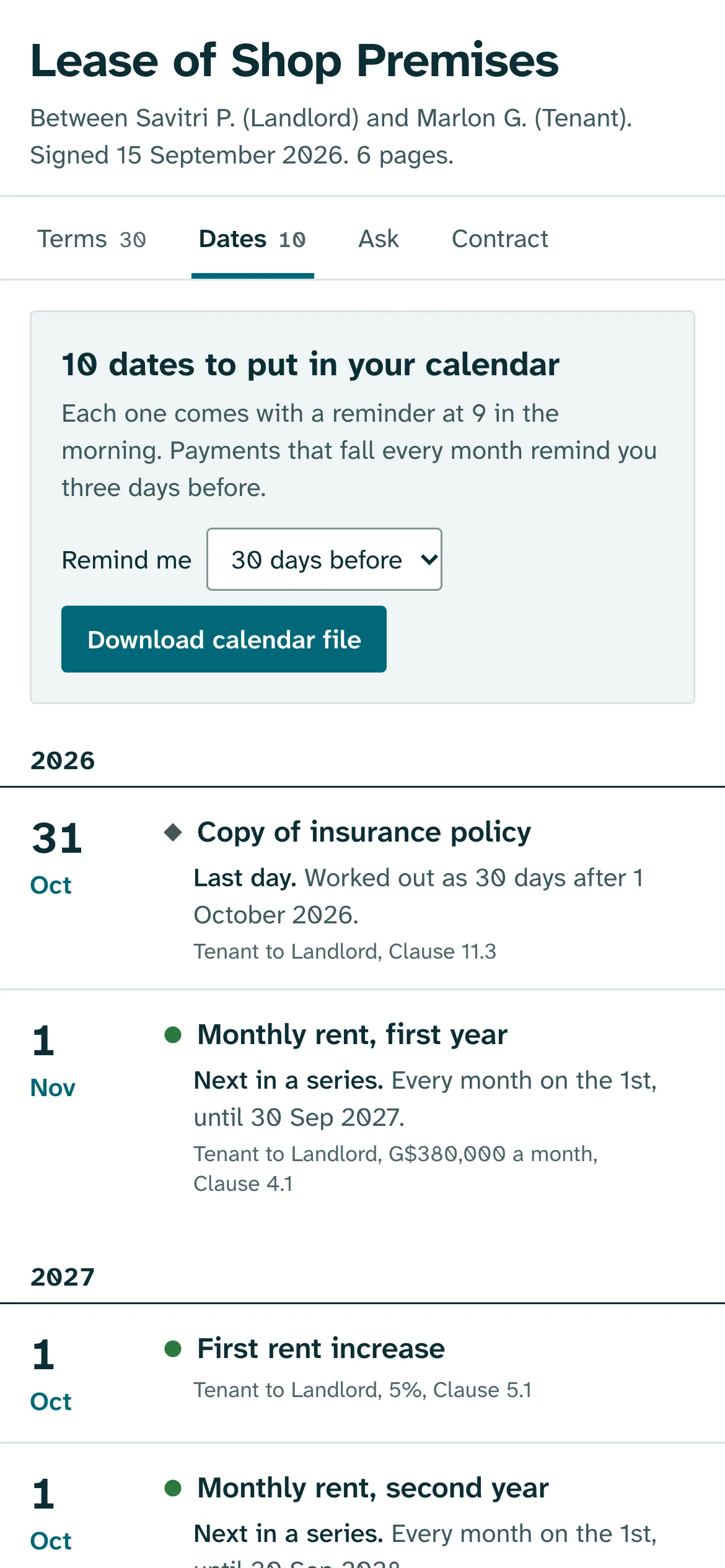
When someone questions a figure, the answer takes seconds to find, because anything taken from a document links back to the page or clause where it appears.

When something goes wrong, the right person hears about it.

We decide in advance who is told and what they need to see, and who is told next if nobody acts.

Nothing is paid or reported until the totals agree.

Amounts are kept in exact cents, so no total drifts through rounding.

Our own products

Each one is live today. Open any of them and judge the standard for yourself.

Every product, in detail

Research in mathematics and finance

On 12 October 2026 the OEIS, the reference mathematicians use for integer sequences, published five new terms that our programs established for one of Paul Erdős's problems. Two programs, written in different ways, searched every number up to 20 trillion, and their answers matched. We check the systems we build for you just as carefully. We have also fitted the US Treasury's yield curve for every trading day since 1990, and we can use a curve like this to show what your own loans would cost if interest rates rose or fell.

Erdős problem 382. A third program checks our result again, every whole number up to 20 trillion, replayed from its log.
US Treasury yields, 1990 to today. Every month of US interest rates since 1990, with music computed from the curve itself.
See the research

What we can build

Software can do much more now than it could a few years ago. A phone line can answer calls at any hour, in English or Spanish, and hand the difficult ones to a person. A camera can notice when a shelf is running low, and past sales can help you decide what to order before Christmas. We take on work as small as a tool for one person and as large as a system a whole business relies on.

Everyday systems

A church rota gets the same care as a company's accounts. Choose one of the three below and watch it work.

A visit report that fills itself in as the voice note plays, each line linked to the moment it was said.

How a project runs

  1. 01

    Understanding

    We talk to the people who do the work and see how it is done today, including the shortcuts they have found.

  2. 02

    Plan

    We set out what we will build, and how we will both know it is working.

  3. 03

    Build

    You see it working early and at each stage, so decisions are made with the real thing in front of you.

  4. 04

    Handover

    The finished system goes live in your business, and your team is shown how to run it.

  5. 05

    Aftercare

    Fixing anything that does not match the plan is part of the job. When you want more, we already know how your system works.

What every build comes with

  • A fixed price, agreed in writing before any work begins
  • Larger builds delivered in stages, each paid for on delivery
  • Source code, files and accounts in your name from the first day
  • Your records on a server, backed up every day, and yours to download at any time
  • Testing with your own data before handover, and again after every change
  • A written guide your team can follow without us

Where we are

We work by video call and message. Guyana shares New York's time for most of the year, so anywhere from Toronto to Houston, our working day is never more than two hours from yours.

In Georgetown it is

Tell us what you want built

A few sentences in your own words are enough to start. We will reply with our questions, then send a plan and a price.

Or write to hello@stratumics.com